Trying Out Some Tasty Blackbird Pie

I immediately liked the name of the new WordPress plug-in, Blackbird Pie. The nursery rhyme popped right into my head: Four and Twenty Black Birds, Baked in a Pie.

The plug-in makes this, essentially a jazzy block quotation:

[blackbirdpie url=”http://twitter.com/#!/tengrrl/status/1348769496965120″]

You include the URL and get a very nice looking presentation of the Tweet that you are writing about. Twitter is behind the functionality, and you can create the links the old fashioned way at Twitter Media’s Blackbird Pie. The WordPress plug-in simplifies things by making it a matter of clicking the blackbird button when you’re in the Visual editing tab for your post.

One of the coolest features of the plug-in is the Search. Know you want to refer to someone’s Tweet, but don’t have the URL handy? Use the search in the plug-in to load up that person’s recent comments and just click the one you want.

Nice and slick. Only problem is it’s not working for me if I use a new Twitter link. You have to delete the #! from the Tweet’s URL to make it work properly.   It’s a minor bug though, and since I know how to fix it, I think I’ll keep the plug-in.

NaNoWriMo Underway

NaNoWriMo Participant 2010I’m a rebel. I’m doing what I want, and ignoring the rules. Usually I’m the goody-two-shoes perfectionist, but as far as writing a manuscript was going, that wasn’t working for me.

I readily confess that I can’t remember how I ever wrote a book in the first place. Somehow I did, but as I’ve thought about writing a second manuscript, I kept returning to the feeling that it was a fluke. I didn’t feel I’d ever be able to do it again. Even restoring the mysteriously deleted companion website felt beyond me.

Then NaNoWriMo came along. November is National Novel Writing Month. This is the twelfth year of the event that encourages writers of all ages to write a 50,000-word piece of fiction by midnight November 30.

I’ve known about NaNoWriMo for several years, but never considered trying it. Just don’t feel like I have a plot in me, though I’d love to be a novelist or poet. Inspired by the special deal on Scrivener for NaNoWriMo participants though, I looked around a bit more yesterday, and I found that the rules are really a good bit looser. You can be a rebel and write nonfiction if you want. The goal is just 50,000 words of whatever. As the seed post on the Rebel forum explains, “This is a self-challenge. The REAL prize of NaNoWriMo is the accomplishment, and the big new manuscript you have at the end. Everything beyond that is icing on the cake.”

So I decided to set up a profile and try to crank out a book draft. Not sure that I will make 50,000 extra words since I have many other things I need to write this month. Still I can try. After midnight on November 1, I created a working outline, based on revisiting my first book, Designing Writing Assignments. Scrivener made this so easy. I created a bunch of folders and tucked some text inside the jotted out what I was thinking of putting there. Done.

In the wee hours of today, November 2, I collected notes and ideas from a few places to copy & paste some very rough ideas into place. That’s where the cheating part comes in. Technically, people write all new text for NaNoWriMo. For my purposes, that’s a silly restriction. I reread sections of Designing Writing Assignments last night, probably for the first time in more than a year. I realized how much of the book had been culled from things that I’d written elsewhere.

That artificially inflates my word count, I know. The thing is that I know I’ll edit it back down as I make all that pasted stuff fit in properly. Even though I know my draft is nothing but a collection of jottings and pastings, it feels remarkable to have collected 12,263 words of stuff. I can actually believe book in my head.

It’s only been two days, but so far NaNo has helped me remember how to write a longer work. And I’ve been freewriting like a fiend—I have the most typo-filled mess ever, but I typed things down. I gave my permission not to be to clean and neat. I just want to gather a bunch of text. I can edit later. If I do nothing else, I’ve accomplished a great deal.

Do You Remember Your High School Lit Class?

On NCTE’s Connected Community, James Wilson responded to the discussion about multicultural literature, lamenting that “the focus on multicultural literature over the last 3 decades has resulted in an inability to teach the classics of the Western tradition. Few of my college freshmen have even heard of Faulkner and Steinbeck, much less read them.”

I understand Wilson’s frustration, but I learned long ago not to believe every word students report about their exposure to authors and literature. Their reports are more likely to be based on what they remember—things that made a strong impression for some reason. Sometimes that’s because they hated every word of text that they had been forced to march through. Sometimes it’s because they loved the text.

Ask me what I read in high school, admittedly a very long time ago—but even fresh after graduation I doubt I’d recall the details. In 12th grade English lit, for instance, I could tell you that I read Beowulf, Canterbury Tales, Macbeth, and “On Looking into Chapman.” Why? I remember hating Beowulf as endlessly dry and boring. I had to do a presentation on the “Wife of Bath,” where I was expected to come up with a costume out of no where. I had to use the nurse’s cape from my elementary school Halloween costume. I felt like an idiot. Macbeth I think I recall because my teacher must have liked it. I remember her reading aloud passages with a lot of theatrics, especially regarding bloody hands.

The most random thing on the list is Keats. My teacher also had a thing for precis and summaries, instilling a lifelong hatred of them in me, for what it’s worth. For some inexplicably nerdy reason, I wrote my precis of “On Looking into Chapman” in rhyming couplets. She read it to the class, without my permission, and I was made fun of for the next 2 weeks.

Bottom line: The problem isn’t “classics” versus multicultural literature. It’s that all too often students don’t have memorable experiences with literature. Frequently, that’s because they’re marched through the canon in an attempt at comprehensive coverage. Reading literature should be more than that, but many times, it isn’t.

Memorable experiences with whatever literature they read will create lifelong readers — and that’s how to get students who read widely and deeply. You can never possibly teach every great text, but you can teach in ways that make people want to read more widely.

[ I don’t accept that we have to choose between multicultural and classic literature. Multicultural literature is in most cases also what I’d defend as classic literature, but that’s a different topic.]

38 Ways to Write about Writing

Writing writing writing...The second National Day on Writing is nearly upon us. Wednesday, October 20, is the day established by the National Council of Teachers of English to celebrate the many kinds of writing that people everywhere do.

Chances are that the students you teach are already writing and already talking about writing each and every day. What can you do to make this one day stand out?

NCTE has some celebration ideas, and the National Writing Project has gathered details on how many sites plan to celebrate. Last year, there were school-wide celebrations at places like Eastern Michigan University and Boston University, special acuities in college writing centers and writing program offices such as the University of Minnesota and Arizona State University, and hundreds of people adding submissions to the National Gallery of Writing like these writers from Pittsburgh, Pennsylvania. The New York Times Learning Network blog even suggested writing activities for students.

For a classroom-based celebration that can fit in with whatever theme or topic you are teaching, try asking students to write about writing. No matter what they are doing, they can reflect on the writing they are doing, the strategies they use, and the different experiences they have had as writers.

The resources below come from a variety of sources, but all ask students to think about themselves as writers. Though some are framed for specific projects (e.g., writer’s blogs) they can easily be adapted and customized. Just share the question and ask students to discuss it in whatever way you like.

Whatever you choose to do, I’d love to hear about your celebration. Please let me know about your plans in the comments.

[Creative Commons licensed Flickr photo by dbdbrobot]


Photo Writing Prompt: A Voice From the Past

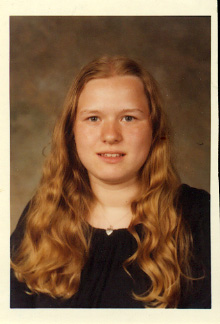
My senior portrait This prompt is inspired by the piece that I wrote about my high school yearbook photo back in August 2009 for Laurie Halse Anderson’s for Write Fifteen Minutes a Day (WFMAD) and that I submitted to Bedford/St. Martin’s Gallery of Writing.

For this project, students choose their own photos, based on the kind of project they are completing. Here are some options students can use:

  • Choose your own school picture or yearbook photos or school pictures, and write an autobiographical memoir.
  • Find a photo of a famous historical figure or contemporary figure, and write your comments after completing some research on the person and the events in his or her life.
  • Use the photo of a family member, and write a biographical reflection, informed by your interactions with that family member.
  • Find a random photo on Flickr, and write a fictional piece about the imagined thoughts of the person in the photo.

A Voice From the Past. What would the person in the photo you have chosen say to you? What would that voice from the past tell you. Your job is to create a text from the perspective of the person in the photo. She will speak to the future, sharing something about things she has learned and what she has done.

Try freewriting on one of these questions to get started:

  • What choices would the person in the picture tell you to make?
  • What would the person regret that was happening when the picture was taken?
  • What would the person look back on with a smile?
  • What would the person wish could be different?
  • What advice or warnings would the person give you?
  • What would the person see now if she (or he) looked back at the photo?
  • What secrets would the person confess now about life then?
  • What does the person in the photo not realize yet?
  • What would the person tell you about goals and dreams?
  • What was important to the person in the photo? Has it changed?


50 Teaching Links You May Have Missed

FerrisWheelI gathered a collection of over 50 links for the ProfHacker Teaching Carnival 4.2. You can find links to teaching in a variety of disciplines at the college and university level, plus links to some humorous articles I found.

There are details at the end of the post on how to suggest your own links (or those of your colleagues) for the November Teaching Carnival, which will be hosted by .

Oh, and the “Right This Way to the Egress” header? Yep, completely inspired by Terry Pratchett’s Tiffany Aching.

[Image: FerrisWheel by twoblueday, on Flickr]