tlg ink: Grammar and Punctuation Memes
February kicked off with this meme that demonstrates what can go wrong if you put a comma in the wrong place:
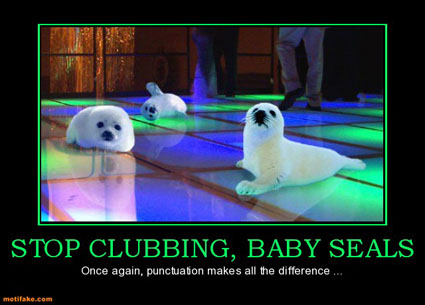
You may recognize that meme as related to the “Let’s eat grandpa” versus “Let’s eat, grandpa” meme that made its way around the social networks some time ago. There were variations that involved grandmothers and uncles, but the punch line was always the same warning: “Punctuation can save lives.”
Last June, a misunderstanding resulted in the widespread belief that Oxford University Press no longer preferred the use of the Oxford comma (or serial comma). During the last eight months, social media spread comic illustrations of the Oxford comma rule, including the strippers, JFK and Stalin; eggs, toast and orange juice; the rhinoceri, Washington and Lincoln; and Tim Tebow thanked his parents, God and Mary. The grandparent of all these comma rules memes, of course, is the title cartoon for Lynne Truss’s Eats, Shoots & Leaves: The Zero Tolerance Approach to Punctuation.
Comic illustrations aren’t limited to comma use. The website Hyperbole and a Half explains the mysteries of the Alot. Yes, I really mean “alot” and not “a lot.” Here’s the site’s explanation:
The Alot is an imaginary creature that I made up to help me deal with my compulsive need to correct other people’s grammar. It kind of looks like a cross between a bear, a yak and a pug, and it has provided hours of entertainment for me in a situation where I’d normally be left feeling angry and disillusioned with the world.
When the cartoon was originally published in April 2010, it was quickly passed along—just like that baby seal meme earlier this month. If you haven’t seen the comic explanation for the Alot, you may have seen one of The Oatmeal’s cartoon explanations of rules for misspelled words, the use of literally versus figuratively, apostrophes, semicolons, or the abbreviation i.e. The Oatmeal cartoons are irreverent and, in some cases, uncomfortably explicit, so they won’t be appropriate for every classroom. Even so, they are quickly passed along by people on sites like Facebook and Twitter.
The popularity of all the examples I’ve shared demonstrates that humorous memes can sometimes be just as educational as rules from a grammar handbook. To get the joke behind one of these memes, you have to understand the grammar or punctuation rule that is involved—and that’s why I’m reconsidering the role of memes in the classroom.
I’ve long believed that Memes Can Build Community in the Classroom, but I’m beginning to wonder if they can be a part of our writing instruction as well. Would grammar and punctuation by comic illustrations have more success than the customary handbook-driven instructional model? Is it time to rethink the handbook for the digital student, stuffing it full of memes and paying more attention to the ways that people read, search for, and pass along information online? Can we dump the old apparatus that marches through parts of speech, grammar rules, and punctuation marks for a more worldly-wise and somewhat less than serious guide to language use?
Sure, it would take a lot of work to convince handbook adoption committees to accept such a highly unconventional text, but students might well find it more approachable and retain more if committees did. Would you use a meme to teach grammar or punctuation? What role does humor play in the rules and guidelines you talk about in class? Drop by my page on Facebook or Google+ and let me know what you think.
###
Alternative: If the baby seals image can't go out in the email, you can replace the beginning and the image with this less entertaining text:
February kicked off with a meme that demonstrates what can go wrong if you put a comma in the wrong place, as demonstrated in these sentences from the image:
- Stop clubbing, baby seals (shown on the poster)
- Stop clubbing baby seals